Introduction
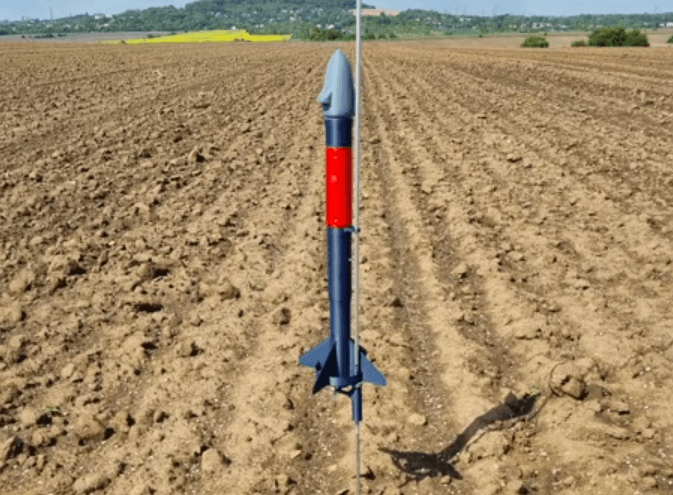
The project involves the construction and testing of an experimental rocket. The completed rocket is to be launched into the air, serving to collect telemetric data and verify recovery systems and flight stability.
Until recently, advanced atmospheric research was reserved for large institutes, but today, robotic structures—experimental rockets—allow us to probe the sky independently. Their main mission is to collect invaluable data on air conditions and test modern telemetry systems. These studies are a significant step toward expanding our engineering knowledge, and inspiration from the dynamic development of the space sector has prompted us to build our own recoverable research platform.
The construction of the prototype rocket will allow for the collection of scientific data about the atmosphere, including CO2 and PM2.5 concentrations, at various altitudes. The device will feature a proprietary telemetry system, GNSS localization, and a high-resolution onboard camera. Thanks to the use of a parachute, the rocket will be reusable.
Project goals and objectives
The main assumption is to design and build a small experimental rocket capable of reaching an altitude of 800 meters. 800 metrów.
Planned set of functions:
- Collect scientific data regarding the atmosphere (CO2 and PM2.5 concentration)
- Transmission of telemetric data during flight to a ground station.
- Automatically open the parachute for safe recovery of the structure.
- Record high-quality video material from the rocket's deck.
- Use GNSS localization to track the route and find the rocket after landing.
- Conduct iterative tests, starting with smaller Class D engines to validate the systems.
Modules implementation and work execution
During the project's implementation, the work is divided into key technical stages:
- CAD Design and Simulations: performing an analysis of solutions and aerodynamic simulations.
- Electronics development: selection of components and design of a PCB layout containing the flight computer, IMU, and environmental sensors.
- Software developmentpreparation of the remote communication, telemetry, and ground station operations systems.
- Integration and static tests: joining of all components and testing the range and stability of radio communication before flight.
- Field validation: test flights (Class D) and operational flights (Class F) to collect scientific data.